Share of Cost: Watch Out for the American Opportunity Act Scam

Saturday, Nov. 5th 2011 6:29 AM

Did you know that by calling a special 1-800 number you may qualify to receive $500 from the American Opportunity Act?  By providing your Social Security number, date of birth and other personal information, in just 4 weeks you will receive a Visa Check card ready to be loaded with money.  Sound too good to be true?  Well it is!

Scam artists are continually misusing real information in an effort to steal beneficiaries’ money and their personal information.  There is no program called the American Opportunity Act that just gives away money.  But as part of the American Recovery and Reinvestment Act, parents and students can qualify under the American Opportunity Tax Credit to pay for college expenses.

We encourage people to never give their personal information out to strangers.  This type of information is used to not only commit identity theft but also to commit medical identity theft as well as stealing money from the health care system in the form of Medicare fraud. To learn more about our California SMP and how you can prevent Medicare fraud and abuse, see our Medicare Fraud section.
Posted on Saturday, Nov. 5th 2011 6:29 AM | by Share of Cost | in Social Security | No Comments »

Walgreens to Anthem script leave network January 1, 2012

Thursday, Nov. 3rd 2011 8:56 AM

In October, we wrote to you about contract talks between Express Scripts, the company that manages the drug store network for us, and Walgreens.  We’re writing today with an update so that you have the very latest news affecting your clients. Despite ongoing talks, it appears the two parties won’t reach an agreement before the end of the year. Absent a last minute agreement, Walgreens will leave the network on January 1, 2012.

We will send one more mailing to employers by email and to members that have used Walgreens within the last 90 days. This mailing urges members to take action to move their prescriptions to another in-network pharmacy before December 31, 2011.

Posted on Thursday, Nov. 3rd 2011 8:56 AM | by Share of Cost | in Medi-Cal | No Comments »

Share of Cost: Consumers Beware of Medicare Advantage Marketing Fraud

Thursday, Nov. 3rd 2011 6:29 AM

Last week Julie Schoen, our California Senior Medicare Patrol (SMP) Project Director, spoke on Medicare fraud on a statewide press teleconference hosted by California’s Department of Managed Health Care (DMHC). Both agencies, DMHC and SMP, are committed to protecting beneficiairies from the sometimes malicious and fraudulent practices of a few insurance agents. While most agents may be trustworthy, DMHC has reports of several who are trying to persuade seniors to switch from their current health plan to the Medicare Advantage (MA) plan they are selling even though it is not in their best interest, and sometimes even without their consent.

DMHC put together a helpful 2-page consumer alert (PDF) that summarizes 7 red flags to watch out for when being approached by an insurance agent, and 10 actions to take before signing up for any new health plan. See Medicare Fraud for more info on fraud. Also see Medicare’s Fall Open Enrollment to learn about your rights to switch MA and Part D plans or return to Original Medicare during Oct 15 through Dec 7.

Posted on Thursday, Nov. 3rd 2011 6:29 AM | by Share of Cost | in Social Security | No Comments »

Share of Cost Rx Discount Drug Card: Free to Consumers

Wednesday, Nov. 2nd 2011 3:52 PM

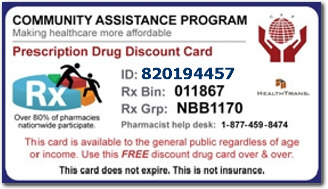
Get your FREE prescription drug discount card   You can save from 10% to 85% on the cost of both brand name and generic prescriptions immediately.

There are no claim forms to fill out and no limits to the number of times you or your family can use the card. Medicare drug discounts are available only at participating pharmacies. The Pharmacy Discount Program provides discounts for its members at certain participating pharmacies for drugs and other healthcare supplies. You can also save on smoking cessation aids and diabetes supplies. These savings are based on the fact that we have over 56,000 pharmacies processing millions of prescriptions annually.

Posted on Wednesday, Nov. 2nd 2011 3:52 PM | by Share of Cost | in Medicaid | 1 Comment »

Despite some enrollment losses, most California health plans still turned a profit in 2010

Wednesday, Nov. 2nd 2011 3:46 PM

Health insurance carriers ground California’s market-based health care system, serving about two-thirds of the state’s population. In addition to covering the privately insured, these companies also serve enrollees in managed care plans through Medi-Cal, Medicare, and other public programs.

While California health insurers are a strong economic force overall, enrollment was flat in health plans overseen by both the California Department of Managed Health Care (DMHC) and the California Department of Insurance (CDI). Most major California health plans saw revenue grow at a slower pace in 2010, while two reported declines in revenues, according to this year’s California Health Plans and Insurers from the California HealthCare Foundation (CHCF).

This report compares information from both regulators whenever possible, examining market share, enrollment, financial performance, and consumer satisfaction for the state’s health plans and insurers.

Key findings include:

  • Five insurance carriers accounted for three-fourths of the $105 billion health insurance revenues in California in 2010. Revenue growth has been faster under CDI-regulated insurers than DMHC-regulated plans.
  • The six largest DMHC-regulated plans together lost more than 400,000 commercial enrollees. In contrast, Medi-Cal and Medicare managed care enrollment grew.
  • In 2010, over half of all Medi-Cal and more than one-third of Medicare beneficiaries were enrolled in managed care plans.
  • Enrollment declined in 2010 for two major CDI-regulated carriers (Anthem Blue Cross and Blue Shield), reversing a growth trend.
  • Five of the six largest DMHC-regulated plans posted positive net income. All major CDI-regulated carriers operated in the black in 2010, in contrast to prior years.
  • Large majorities of HMO and PPO members rated their plan highly in terms of getting appointments quickly, finding a doctor, and getting the care they need. HMO enrollees more often rated their care highly than those enrolled in PPOs, while PPO participants were more likely to cite fast appointment turnaround.

Read California Health Plans and Insurers online now.

This report is published as part of the CHCF California Health Care Almanac, an online clearinghouse for key data and analysis examining California’s health care marketplace. Find all Almanac reports at www.chcf.org/almanac.

Posted on Wednesday, Nov. 2nd 2011 3:46 PM | by Share of Cost | in Medi-Cal | No Comments »

Share of Cost: Medicare’s Fall Open Enrollment Has Begun ~ Oct 15 – Dec 7

Tuesday, Nov. 1st 2011 6:29 AM

Medicare’s Fall Open Enrollment, officially known as the Annual Enrollment Period (AEP) starts and ends earlier now. From October 15 – December 7, beneficiaries can change their Medicare health plan and Part D coverage and/or return to Original Medicare. Coverage changes become effective January 1, 2012.

Learn more about the AEP and other enrollment periods. Beneficiaries can also contact their local Health Insurance Counseling and Advocacy Program (HICAP) for free counseling and information on their health care options in their area.

Posted on Tuesday, Nov. 1st 2011 6:29 AM | by Share of Cost | in Social Security | No Comments »

Share of Cost: California Beneficiaries Hit Hard by Medicare Advantage Plan Pull-outs

Sunday, Oct. 30th 2011 6:29 AM

Almost 151,000 beneficiaries in California are in a Medicare Advantage plan that is pulling out of Medicare in 2012. This means these plans are not renewing their Medicare contracts, their plans are terminating by the end of the year, and beneficiaries enrolled in these plans need to choose a new coverage option for 2012. With a total of 301,912 beneficiaries nationwide affected by such terminations, 50% are in California.  Anthem Blue Cross is the reason for this high percentage of affected beneficiaries. They decided not to renew two regional PPO plans, the Freedom Blue plans, which have 113,709 enrollees or 75% of affected beneficiaries statewide.

Anthem Blue’s explanation for not renewing these popular regional PPO plans is “to ensure that we manage our operational and financial stability so that we can continue to support our member’s needs today and in the future.”  Other Medicare Advantage plans that are not renewing account for the remaining 25% of affected beneficiaries.  Some of these plans may be terminating because of low enrollment.

What can beneficiaries in this situation do?

Beneficiaries who are affected by these non-renewals should have received a notice from their plan on or before Oct 2nd informing them about their upcoming termination and that they have a Special Election Period (SEP) to join another plan.  They also have the option to return to Original Medicare, enroll in a stand-alone Part D prescription drug plan, and use a Guaranteed Issue right to purchase a Medigap policy without a health screening, a form of Medicare supplemental insurance. See When MA Plans Terminate for more info.

Beneficiaries who want to use their SEP to join another Medicare health plan may or may not have many plan options to choose from depending on which county they live in. Generally, beneficiaries in southern California have many Medicare Advantage plan options, especially HMOs, whereas beneficiaries in northern California have fewer Medicare Advantage plan options.  In urban areas in northern California, some counties have a few HMO plans, and in rural areas, some counties have private fee-for-service (PFFS) plans only.

Although there are no counties without any Medicare Advantage plan options, a few counties have options that are not affordable or suitable.  For example, four counties – Marin, Nevada, Sutter and Yuba – each have only one Medicare Advantage plan in 2012, and the premiums of these plans range from $79.60 to $99, much higher than the current Freedom Blue PPO which has a $0 premium.  Another example is Santa Cruz county which will have two Medicare Advantage plans next year, but the premiums are high: one HMO with prescription drug coverage at $192 and one HMO without prescription drug coverage at $89. Beneficiaries who want a Medicare Advantage plan and prescription drug coverage have to choose the HMO with prescription drug coverage because of a rule that a beneficiary cannot combine an HMO with a stand-alone Part D plan.

Three counties – San Benito, Tehema and Tuolumne – illustrate another problem. Each county has only a private fee-for-service plan; they have no local HMO or PPO plans.  Many doctors do not accept the payment terms and conditions of these private fee-for-service plans.  Thus a private fee-for-service plan enrollee may have coverage but no access to his or her doctor.

Sponsors of plans that are not renewing are trying to get affected beneficiaries to enroll in the sponsor’s other plans, such as other MA plans or stand-alone Part D plans.  Anthem Blue, for instance, is offering local PPO plans in 13 counties and three Part D plans statewide.  Insurance companies that sell Medigap policies, including some sponsors of Medicare Advantage plans, are also targeting affected beneficiaries since these beneficiaries have a guaranteed issue right to buy a Medigap policy.  Beneficiaries should look at all their options and not just the plans offered by one sponsor.  To find out about their options, beneficiaries’ best bet is to contact their local HICAP (Health Insurance Counseling & Advocacy Program) at 1-800-434-0222.  Local HICAPs provide objective Medicare benefits counseling at no cost, such as helping a beneficiary compare the difference between Medicare Advantage plans and Medigap, or finding and comparing Part D prescription drug plans.

All Medicare beneficiaries can make changes involving a Medicare Advantage or Part D plan during the Annual Election Period, also called Fall Open Enrollment, which is earlier this year, from October 15 to December 7.  A beneficiary who is in a non-renewing plan also has a Special Election Period from Dec 8 to Feb 29, which gives them more time to make a change.

See our website for more information on the AEP and your rights if your Medicare health plan is terminating coverage.

Posted on Sunday, Oct. 30th 2011 6:29 AM | by Share of Cost | in Social Security | No Comments »

The Risks And Benefits Of Alcohol Drinking In The Elderly

Saturday, Oct. 29th 2011 6:40 AM

The Royal College of Psychiatrists of London has published a report related primarily to problems of unrecognized alcohol misuse among the elderly. The report provides guidelines for psychiatrists and family physicians on how to find and how to treat elderly people with misuse of alcohol and drugs.

Posted on Saturday, Oct. 29th 2011 6:40 AM | by Share of Cost | in Share of Cost | No Comments »

SOC: What is a Eligibility Verification Confirmation (EVC) number for Share of Cost

Thursday, Oct. 27th 2011 6:59 AM

Once SOC has been certified, an Eligibility Verification Confirmation (EVC) number is displayed in the message returned by the Medi-Cal eligibility verification system.  Return of an EVC number does not guarantee that a subscriber qualifies for full-scope Medi-Cal or CMSP benefits.  It does, however, indicate that the subscriber qualifies for at least partial services.  Providers should carefully read the eligibility message to determine what Medi-Cal service limitations, if any, apply to the subscriber. Providers are not required to include the EVC number on the claim, but may choose to do so for their own record keeping purposes.  When included, the EVC number should be entered in the remarks area of the claim.

Posted on Thursday, Oct. 27th 2011 6:59 AM | by Share of Cost | in Share of Cost | No Comments »

Share of Cost is calculated independently for CMSP and Medi-Cal

Tuesday, Oct. 25th 2011 6:03 AM

SOC policy also applies to County Medical Services Program (CMSP) providers and subscribers. Share of Cost is calculated independently for CMSP and Medi-Cal, however, the same subscriber income is included in both calculations. Therefore, the same medical expenses may be used to clear SOC for both programs.  Providers may apply the same services used to clear a Medi-Cal SOC obligation to clear a CMSP SOC obligation.  Two separate transactions are required.  Clearing Share of Cost for one program does not automatically clear SOC for the other program.

Posted on Tuesday, Oct. 25th 2011 6:03 AM | by Share of Cost | in Share of Cost | No Comments »

Share of Cost Case Summary

Sunday, Oct. 23rd 2011 6:01 AM

Your Medi-Cal case has been affected by a lawsuit called Sneede v. Kizer.  This lawsuit limits which family members may use medical expenses that are not billed to Medi-Cal to meet their family’s Share of Cost. If you are a spouse or a parent, you have the choice of listing your medical expenses in any case number on the reverse side of this form in which your name appears.  You may list all your medical expenses in a single case number, or you may divide up the expense and list it in two or more case numbers in which your name appears.  However, the total being reported for the single service cannot be more than the original bill.

If you are a caretaker relative such as a grandparent, aunt, uncle, etc., your medical expenses may only be listed in the case number in which your name appears. If you are a minor mother, a mother under the age of 21 years who lives in the home with her parent(s), you may list your medical expenses in both the case number with your parent(s) and again in the case number where you are in an aid code “IE” with your child.  The same medical expense for minor mothers should be listed TWICE IN FULL.  The medical expense is never divided up. IMPORTANT:  A person listed as “IE” or “RR” in the aid code section on the reverse side of this form will not receive Medi-Cal benefits when the Share of Cost for that case number has been met.  In order to receive Medi-Cal benefits, this person must meet the Share of Cost for a case number where the person is not listed as an “IE” or “RR.” This summary does not guarantee Medi-Cal eligibility.  This summary only shows which members of the family have a Share of Cost for Medi-Cal. Note:    “IE” means ineligible and “RR” means Responsible Relative.

According to the Sneede v. Kizer lawsuit, a subscriber’s eligibility and SOC must be determined using his/her own property.  Children and spouses within the same family may have varying SOCs and, therefore, multiple case numbers listed on the Share of Cost Case Summary form. Sneede v. Kizer cases may result in the following scenarios: 1.    A mother has medical expenses totaling $75 that have not been billed to Medi-Cal.  The mother has a Share of Cost Case Summary form that lists her in two separate cases.  She is listed with an “RR” code with her child and she is listed by herself with aid code 37.  She may do one of the following: •    Apply the entire $75 to her own $100 SOC. •    Apply the entire $75 to her child’s $125 SOC. •    Apply any amount less than $75 to her SOC and the balance of the $75 to her child’s SOC.  The total amount reported cannot exceed the original $75. 2.

The Smith family consists of a stepfather (husband), a mother (wife) and the mother’s separate child.  The wife and her husband are listed together on the Share of Cost Case Summary form as eligible subscribers with a $100 SOC.  The mother is listed as an “RR” with her child in the second case with a $125 SOC. The mother has medical expenses totaling $100 that have not been billed to Medi-Cal.  She may do one of the following: •    Apply the entire $100 to her own $100 SOC. •    Apply the entire $100 to her child’s $125 SOC. •    Apply any amount less than $100 to her SOC and the balance of the $100 to her child’s SOC.  The total amount reported cannot exceed the original $100. In all other cases that do not involve a natural or adoptive parent, Share of Cost can be cleared only for a person’s own medical expenses.  Examples: •    Caretaker relatives (such as a grandparent, aunt or uncle) can use their medical expenses to clear only their own Share of Cost. •    Children can use their medical expenses to clear only their own Share of Cost.

A minor mother is listed on the Share of Cost Case Summary form with an “IE” (ineligible) or “RR” aid code in the same case with her child.  In addition, the minor mother also may be in a second case, either listed with her parent(s) or in her own case.  In this situation only, full medical expenses may be used to clear SOC in both cases.  Two separate transactions are required. A minor mother is defined as a mother under the age of 21 who resides in the home of her parent(s).

Posted on Sunday, Oct. 23rd 2011 6:01 AM | by Share of Cost | in Share of Cost | No Comments »

Reversing Share of Cost Transaction

Friday, Oct. 21st 2011 6:57 AM

To reverse SOC transactions, providers enter the same information as for a clearance but specify that the entry is a reversal transaction.  After the SOC file is updated, providers receive confirmation that the reversal is completed.  Once a subscriber has been certified as having met the Share of Cost, reversal transactions can no longer be performed.  Reversals may only be performed for partial clearance prior to the time the subscriber is certified as eligible.

Posted on Friday, Oct. 21st 2011 6:57 AM | by Share of Cost | in Share of Cost | No Comments »

Share of Cost Clearance Transaction

Monday, Oct. 17th 2011 6:46 AM

To clear a subscriber’s SOC, the provider accesses the Medi-Cal eligibility verification system, enters a provider number, Provider Identification Number (PIN), subscriber identification number, BIC issue date, billing code and service charge.  The SOC information is updated and a response is displayed on the screen or relayed over the telephone. Several clearance transactions may be required to fully certify SOC.   In other words, providers must continue to clear SOC until it is  completely certified.  (Clearing Share of Cost is also referred to as “spending down” the SOC.) Providers must perform an SOC clearance transaction immediately upon receiving payment, or accepting obligation from the subscriber, for the service rendered.

Delays in performing the SOC clearance transaction may prevent the subscriber from receiving other medically needed services. Submit only one SOC clearance transaction for each rendered service used to clear the subscriber’s Share of Cost, even if a payment plan is used to meet the obligation. All medically necessary health services – including medical services, supplies, devices and prescription drugs, whether Medi-Cal covered or not – can be used to meet Share of Cost for Medi-Cal and County Medical Services Program (CMSP) purposes.  (Refer to “CMSP:  SOC Policy Applies” elsewhere in this section for additional information.)

Posted on Monday, Oct. 17th 2011 6:46 AM | by Share of Cost | in Share of Cost | No Comments »

Long Term Care Share of Cost

Saturday, Oct. 15th 2011 6:38 AM

Providers receiving an eligibility verification message (see following example) that indicates a subscriber has an LTC SOC should not  clear the SOC online.  Subscribers with aid codes 13, 23, 53 and 63 must have their LTC SOC cleared on the claim.  The LTC facility  includes the LTC SOC amount for Medi-Cal-covered services on the  Payment Request for Long Term Care (25-1).  Refer to the Share of  Cost (SOC):  25-1 for Long Term Care section in the Part 2 manual for additional information.   When billing for room and board (revenue code 0658), the Hospice provider includes the LTC SOC amount for Medi-Cal-covered services on the UB-04 claim form.  Refer to the Hospice Care:  General Billing Instructions section in the Part 2 manual for additional information.

Posted on Saturday, Oct. 15th 2011 6:38 AM | by Share of Cost | in Share of Cost | No Comments »

Certifying Share of Cost Benefits and Coverage

Thursday, Oct. 13th 2011 6:37 AM

Subscribers are not eligible to receive Medi-Cal benefits until their monthly Share of Cost dollar amount has been certified online. Certifying SOC means that the Medi-Cal eligibility verification system shows the subscriber has paid or become obligated for the entire monthly dollar SOC amount owed. Claims submitted for services rendered to a subscriber whose SOC is not certified through the Medi-Cal eligibility verification system will be denied. Exception:    Share of Cost is certified differently for Long Term Care (LTC) subscribers with specific aid codes. To avoid duplicate billing, Hospice providers must indicate the SOC on the UB-04 claim when billing for hospice room and board (revenue code 658) if the SOC was not already met on a Payment Request for Long Term Care (25-1) claim.

Posted on Thursday, Oct. 13th 2011 6:37 AM | by Share of Cost | in Social Security | No Comments »

Providers may collect SOC payments

Tuesday, Oct. 11th 2011 6:36 AM

Providers may collect SOC payments from a subscriber on the date that services are rendered or providers may allow a subscriber to “obligate” payment for rendered services.  Obligating payment means the provider allows the subscriber to pay for the services at a later date or through an installment plan.  Obligated payments must be used by the provider to clear Share of Cost.  SOC obligation  agreements are between the subscriber and the provider and should be in writing, signed by both parties for protection.  Medi-Cal will not reimburse the provider for SOC payments obligated, but not paid by the subscriber.

Posted on Tuesday, Oct. 11th 2011 6:36 AM | by Share of Cost | in Social Security | No Comments »